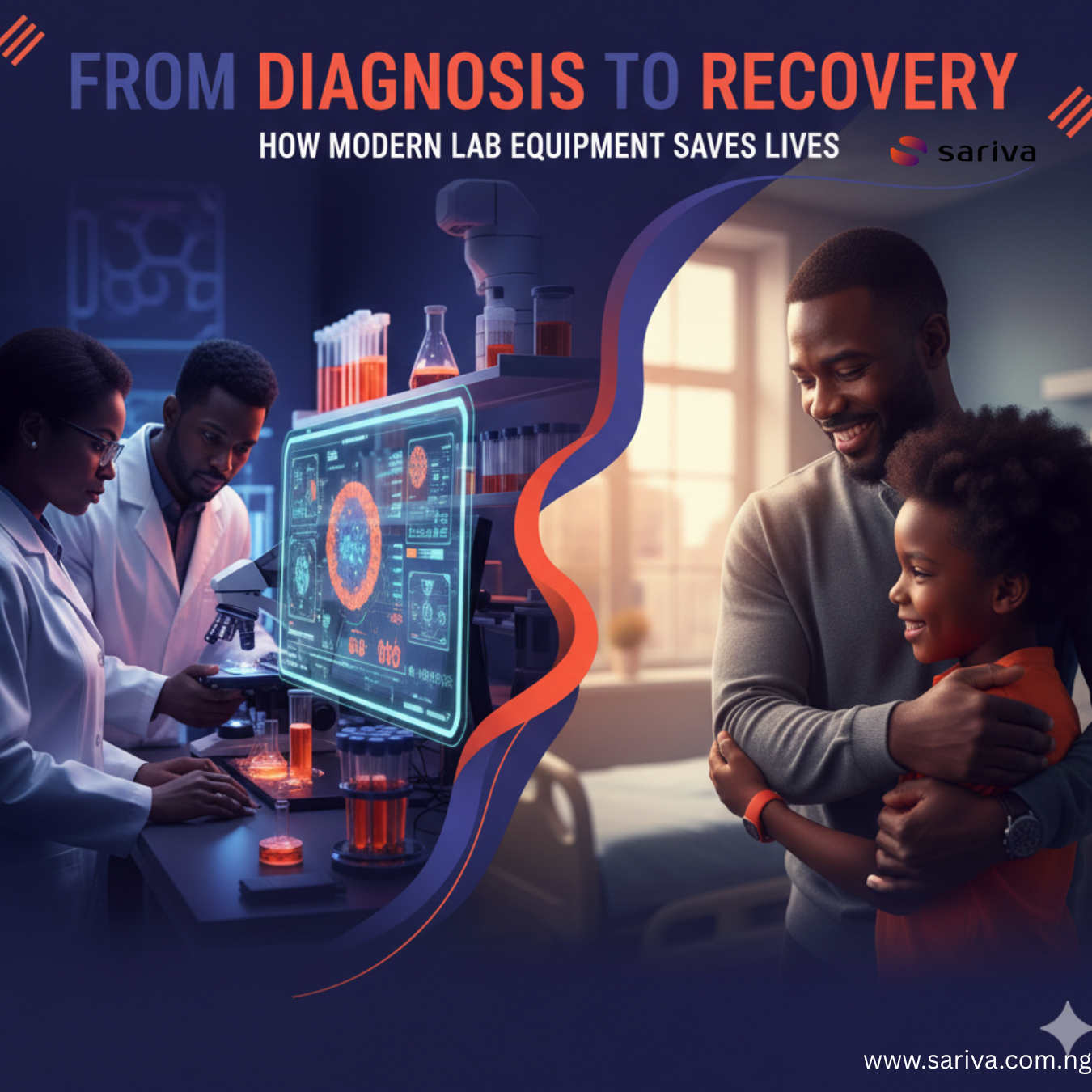
From Diagnosis to Recovery: How Modern Lab Equipment Saves Lives.
Most life-saving moments in healthcare don’t happen in operating rooms or emergency wards. They happen quietly, behind laboratory doors.
A blood sample. A tissue slide. A test result delivered on time.
Long before treatment begins, laboratory equipment shapes the outcome. It determines what clinicians see, how fast they act, and how confidently they treat. In many cases, recovery starts not with medicine, but with accurate diagnosis.
This article explores how modern laboratory equipment plays a decisive role in saving lives, from the first test to full recovery.
Diagnosis Is the First Treatment
Every clinical decision depends on one thing: information.
Laboratory results guide diagnoses, confirm suspicions, rule out conditions, and monitor treatment progress. When results are delayed or inaccurate, care becomes reactive instead of intentional.
Modern lab equipment enables:
- Early detection of disease
- Accurate differentiation between similar conditions
- Monitoring of treatment response
- Reduction in unnecessary or incorrect treatments
Without reliable diagnostics, even the best clinicians are forced to guess.
Speed Changes Outcomes.
Time matters in diagnosis.
Infections progress. Organ damage worsens. Conditions that could be managed early become complicated later.
Modern lab systems shorten turnaround times through automation and precision. Faster results allow clinicians to intervene earlier, often preventing deterioration and reducing hospital stays.
In critical cases, hours saved can mean lives saved.
Accuracy Builds Clinical Confidence.
Laboratory errors don’t just affect numbers on a report. They affect decisions.
Reliable lab equipment provides:
- Consistent and repeatable results
- Reduced risk of misdiagnosis
- Clear data clinicians can trust
When clinicians trust results, treatment becomes decisive and targeted. When they don’t, care slows down, tests are repeated, and patients wait.
From Detection to Recovery.
Lab equipment doesn’t stop mattering after diagnosis. It continues to guide recovery.
Follow-up testing helps clinicians:
- Track patient progress
- Adjust medications
- Detect complications early
- Confirm recovery
Modern equipment supports continuity of care, ensuring treatment remains effective from start to finish.
The Cost of Outdated or Poorly Supported Labs.
Outdated lab equipment introduces silent risks:
- Delayed results
- Inconclusive findings
- Frequent breakdowns
- Overworked staff compensating for unreliable tools
These issues affect patient outcomes and place unnecessary strain on healthcare teams.
Laboratories as Clinical Partners.
Laboratories are not support units. They are clinical partners.
When equipped properly, labs become central to patient safety, efficiency, and quality care. When neglected, they become bottlenecks.
At Sariva Healthcare, laboratory solutions are approached with clinical impact in mind. From equipment selection to installation, training, and support, the focus remains on accuracy, reliability, and long-term performance.
Because saving lives often begins with getting the diagnosis right.