
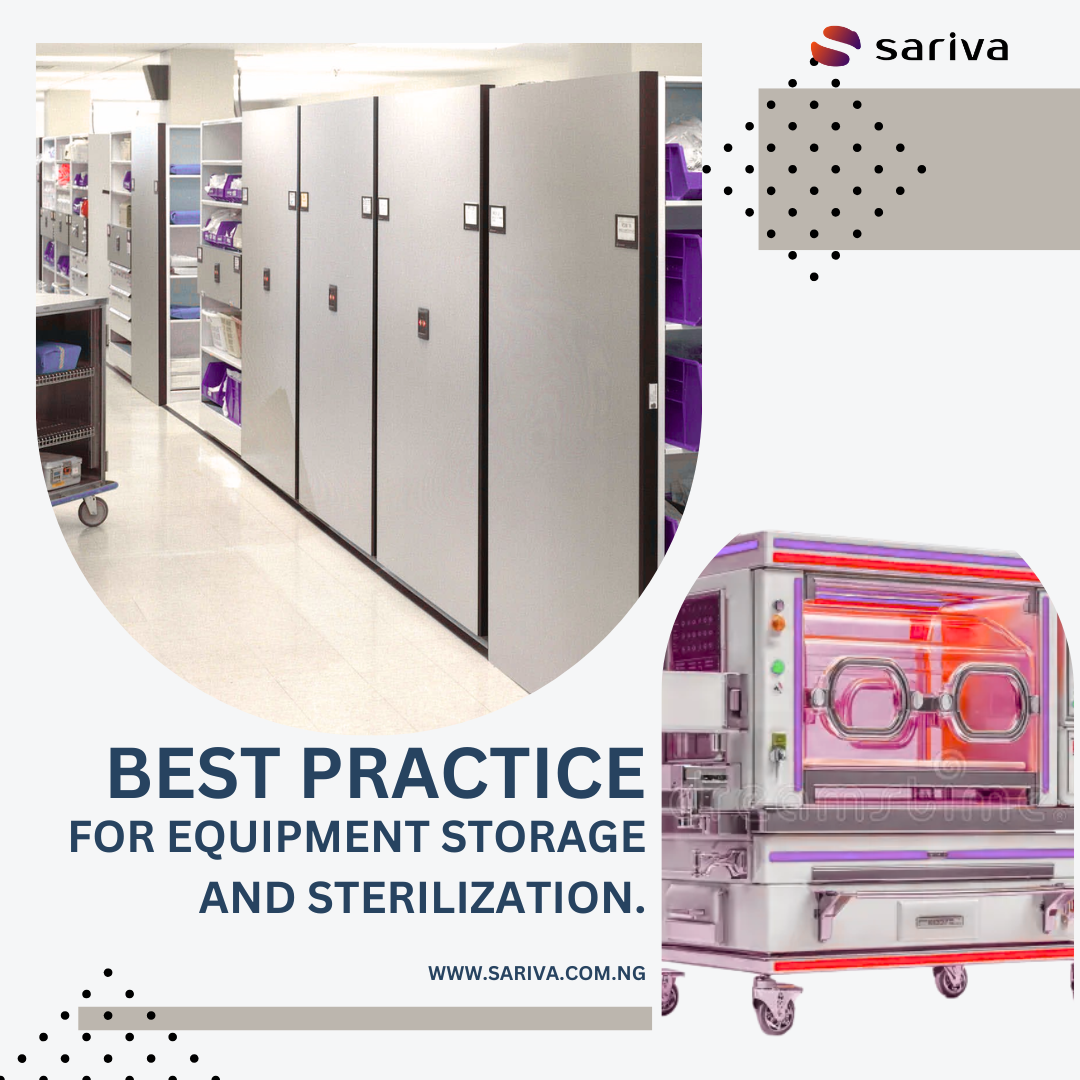
Medical equipment is the backbone of patient care. Yet even the most advanced devices are only as effective as the systems that protect them. Improper storage or sterilization doesn’t just reduce lifespan, it risks patient safety, increases costs, and undermines hospital credibility.
Many facilities in Nigeria and beyond focus heavily on acquisition, buying the latest machines, monitors, and surgical tools, without giving equal attention to what comes after: how these devices are stored, maintained, and sterilized. The result is equipment that fails prematurely or, worse, becomes a vector for infection.
This article outlines best practices for equipment storage and sterilization, highlighting why hospitals must treat these processes as core components of care delivery rather than afterthoughts.
Storage: Protecting Equipment Starts With Where It Lives.
Proper storage is more than shelving devices; it’s designing an environment that preserves function and safety.
Key considerations include:
- Environment Control: Temperature, humidity, and light exposure can degrade sensitive devices. Ensure storage rooms meet manufacturer specifications.
- Organization and Labeling: Equipment should be stored logically, with clear labeling for type, size, and expiration (for consumables). Avoid stacking or overcrowding, which can damage equipment or complicate retrieval.
- Security and Access: Only trained personnel should handle critical devices. Restricted access reduces the risk of mishandling and contamination.
- Inventory Management: Regular audits and digital tracking help prevent loss, expired stock, or overstocking. Knowing exactly what you have, where it is, and when it was last serviced is foundational to operational efficiency.
Sterilization: Beyond Cleaning.
Sterilization is not simply washing instruments; it is a controlled, repeatable process that ensures devices are safe for patient contact.
Best practices include:
- Following Manufacturer Guidelines: Each device has unique sterilization requirements. Autoclaving, chemical sterilants, or low-temperature methods must align with device specifications.
- Preventing Cross-Contamination: Dedicated zones for dirty, clean, and sterilized equipment reduce infection risk. Clearly marked workflows and staff training reinforce safety.
- Routine Validation and Monitoring: Sterilization equipment must be regularly calibrated, and biological or chemical indicators used to verify efficacy. A sterilizer that runs without confirmation is a risk, not a solution.
- Documentation: Track sterilization cycles, device usage, and staff responsible. This ensures accountability and supports regulatory compliance.
Integration With Hospital Operations.
Equipment storage and sterilization cannot exist in isolation. They must integrate with broader hospital workflows:
- Maintenance Scheduling: Devices should be serviced according to a set schedule, coordinated with storage and sterilization routines.
- Staff Training: Proper handling, storage, and sterilization require regular training, refresher courses, and adherence monitoring.
- Regulatory Compliance: Align practices with the Nigerian Ministry of Health, professional councils, and infection prevention guidelines. Proactive compliance avoids costly delays, fines, or operational restrictions.
The Cost of Neglect.
Hospitals that overlook these systems pay the price in multiple ways:
- Reduced equipment lifespan and increased replacement costs
- Higher infection rates, impacting patient trust and safety
- Operational inefficiencies that burden staff and reduce productivity
- Regulatory scrutiny and potential penalties
Building a Culture of Safety and Precision.
Ultimately, best practices in storage and sterilization require more than policies—they require culture. Hospitals that instill discipline, accountability, and ongoing training ensure that equipment serves its purpose reliably, day after day.
At Sariva Healthcare, we approach equipment lifecycle management as a core component of hospital setup. From proper storage design to sterilization protocols and staff training, the focus is on sustainability, patient safety, and operational efficiency. Because medical equipment is only as good as the system that supports it.