Electricity is often treated as background infrastructure in healthcare. It powers lights, air conditioning, and administrative systems. Yet in practice, stable electricity is a clinical requirement. When power becomes unreliable, patient care, equipment performance, and hospital finances are all affected.
Across Nigeria and many emerging health systems, power instability remains one of the most persistent operational challenges. Frequent outages, voltage fluctuations, and dependence on generators create conditions that medical equipment was never designed to tolerate.
This article explores how unstable power affects hospital equipment and outlines practical strategies for building resilience.
Why Medical Equipment Requires Stable Power.
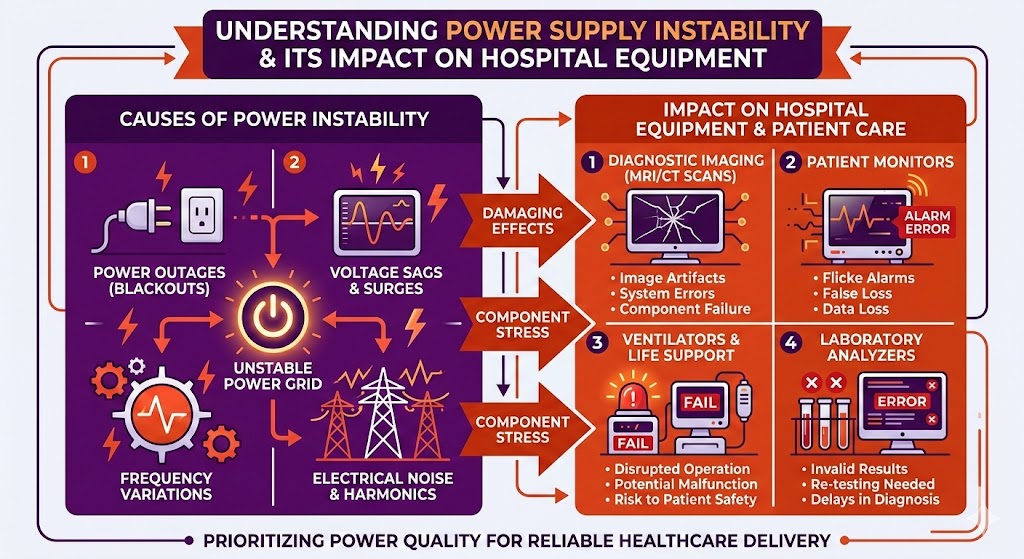
Modern medical devices are engineered to operate within strict electrical parameters. Imaging systems, laboratory analyzers, ventilators, sterilization units, and monitoring equipment rely on consistent voltage and frequency to function accurately.
When those parameters shift, devices may:
- Produce inaccurate results
- Shut down unexpectedly
- Experience accelerated component wear
- Trigger internal fault alarms
- Require frequent recalibration or repair
In high-acuity environments such as operating theatres or intensive care units, these disruptions can compromise patient safety.
The Hidden Forms of Power Instability.
Power instability is not limited to blackouts. It often manifests in less visible ways that are equally damaging:
Voltage fluctuations
Sudden drops or spikes can damage circuit boards, sensors, and compressors.
Power surges
Surges may occur during grid restoration or generator changeover, exposing equipment to destructive electrical loads.
Generator-related inconsistencies
Improperly maintained generators can produce unstable output, introducing frequency variation and electrical noise.
Frequent switching between power sources
Repeated transitions between grid, generator, and inverter systems can shorten equipment lifespan.
These issues accumulate gradually, leading to premature equipment failure and rising maintenance costs.
Operational Consequences for Hospitals.
Unstable power affects more than device performance. It shapes hospital operations in measurable ways.
Increased Equipment Downtime
Unexpected shutdowns disrupt clinical workflows, delay procedures, and reduce patient throughput.
Higher Maintenance and Replacement Costs
Electrical damage accelerates wear on sensitive components, leading to frequent repairs or early replacement.
Compromised Diagnostic Accuracy
Laboratory and imaging equipment exposed to voltage variation may generate unreliable results, affecting clinical decisions.
Infection Prevention Risks
Sterilization equipment and cold-chain systems rely on stable power. Interruptions can compromise sterility or temperature control.
Staff Fatigue and Workflow Disruption
Repeated power-related interruptions force staff to improvise, increasing stress and reducing efficiency.
Designing Power Resilience Into Hospital Infrastructure.
Hospitals cannot eliminate grid instability, but they can design systems that protect equipment and maintain continuity of care.
Key strategies include:
Power conditioning and stabilization
Voltage stabilizers, surge protectors, and power conditioners shield sensitive devices from electrical irregularities.
Uninterruptible power supply (UPS) systems
UPS units provide immediate backup power, preventing abrupt shutdowns and protecting critical equipment during outages or changeovers.
Dedicated power lines for critical equipment
Separating high-priority devices from general facility loads reduces electrical interference and overload risk.
Generator optimization and maintenance
Routine servicing, load balancing, and proper installation improve generator output stability.
Energy planning during facility design
Electrical infrastructure should be planned alongside clinical workflow and equipment specifications, not retrofitted after installation.
The Role of Lifecycle Equipment Planning.
Power resilience is not solely an engineering issue. It is part of equipment lifecycle management.
Hospitals must consider electrical requirements during:
- Equipment selection and procurement
- Installation and commissioning
- Preventive maintenance planning
- Staff training and operational protocols
Devices that appear compatible on paper may fail in environments with unstable electricity unless protective measures are integrated from the start.
Moving From Reactive Fixes to System Thinking.
Many hospitals respond to power-related equipment failures with repairs or ad hoc protective devices. While these interventions offer temporary relief, they rarely address the underlying issue.
A sustainable approach treats electricity as a clinical infrastructure system, coordinating engineering, biomedical support, and operational planning.
This shift reduces equipment downtime, improves patient safety, and protects long-term capital investment.
Where Coordination Makes the Difference.
Addressing power instability requires alignment between facility design, equipment specifications, and operational planning. Hospitals that integrate these elements early avoid costly retrofitting and recurring equipment damage.
At Sariva Healthcare, power resilience is considered a core component of equipment planning and hospital setup. From electrical infrastructure assessment to installation support and lifecycle maintenance, the focus remains on protecting equipment performance and ensuring continuity of care.
Because in healthcare, electricity is not just a utility. It is a clinical dependency.