Medical technology has transformed healthcare. Advanced diagnostic machines, ventilators, imaging systems, and laboratory analyzers improve accuracy, efficiency, and patient outcomes. But these benefits only materialize when staff know how to operate them correctly.
In many hospitals, equipment is purchased and installed, yet proper training is overlooked or treated as an afterthought. The result? Misuse, underutilization, avoidable errors, and even damage to expensive devices.
This article explores effective strategies for training hospital staff to use high-tech medical equipment safely, efficiently, and consistently.
Start With Competency Assessment.
Before training begins, assess existing staff knowledge:
- Identify who will use the device directly.
- Determine baseline skills in operation, troubleshooting, and safety protocols.
- Recognize gaps that need targeted training.
Understanding where your team stands ensures training is relevant, focused, and impactful.
Integrate Hands-On, Scenario-Based Learning.
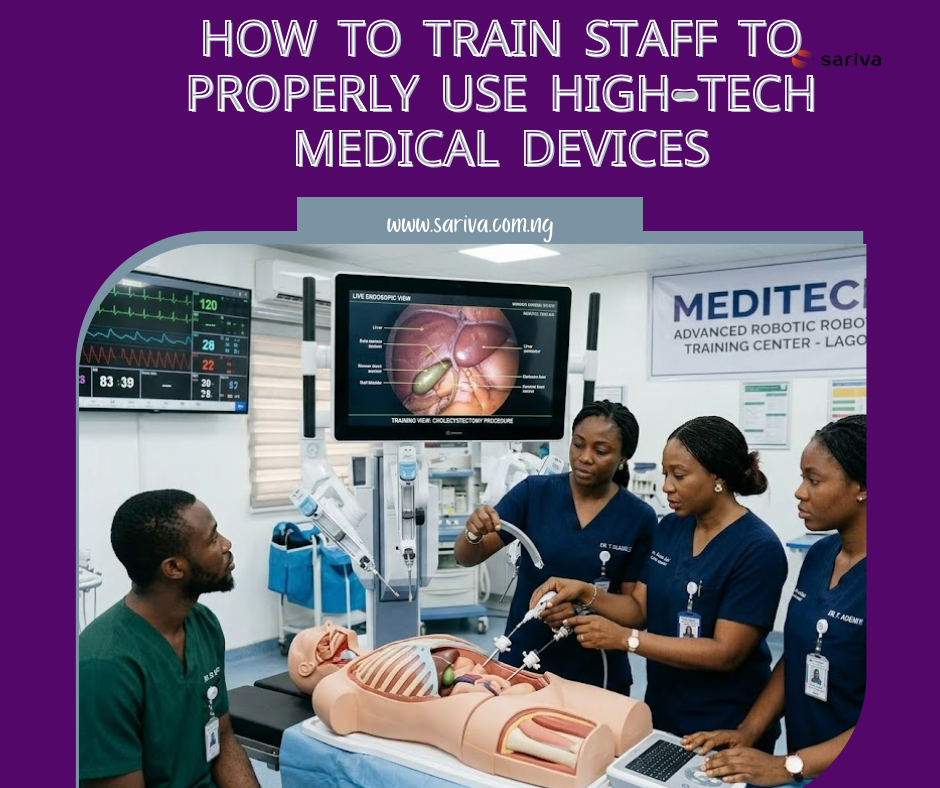
High-tech medical devices are complex. Theory alone is insufficient. Training should include:
- Demonstrations: Step-by-step use under supervision.
- Simulations: Practice in realistic scenarios that replicate clinical conditions.
- Troubleshooting Exercises: Teach staff to recognize and resolve common operational issues.
Hands-on practice builds confidence, reduces errors, and reinforces memory retention.
Standardize Protocols and Documentation.
Even trained staff can make mistakes without clear guidelines. Hospitals should:
- Provide operation manuals and quick reference guides.
- Develop standard operating procedures (SOPs) for each device.
- Maintain logs for use, maintenance, and issues encountered.
Standardization ensures consistency, especially in high-turnover environments.
Emphasize Safety and Infection Control.
High-tech devices often interact with patients directly. Training must reinforce:
- Proper device cleaning and sterilization procedures.
- Safe handling to prevent injury or infection.
- Awareness of alarms, error codes, and emergency shutoffs.
Integrating safety training reduces risk to both patients and staff.
Offer Ongoing Support and Refresher Training.
Technology evolves, and staff skills can fade without reinforcement. Effective programs include:
- Scheduled refresher sessions
- Updates when new features or upgrades are introduced
- Access to on-site or remote support from biomedical engineers or vendor specialists
Continuous learning ensures devices are used optimally throughout their lifecycle.
Foster a Culture of Accountability and Feedback.
Encourage staff to report errors, challenges, and suggestions without fear of blame. Feedback loops help identify training gaps and device issues early, preventing escalation into patient safety incidents or equipment damage.
Measure Training Effectiveness.
Training should have measurable outcomes:
- Competency assessments before and after sessions
- Monitoring of error rates, device downtime, and misuse incidents
- Feedback surveys from staff to refine training programs
Measurement ensures that training is more than a checklist; it is a tool for improving clinical outcomes.
Conclusion.
High-tech medical devices deliver enormous value, but only when staff are equipped to use them safely and effectively. Structured, hands-on training, supported by clear protocols, ongoing reinforcement, and accountability, transforms complex technology into a reliable extension of clinical care.
At Sariva Healthcare, we integrate staff training into every hospital setup plan. From device selection to installation, operational protocols, and competency programs, we ensure medical technology supports patients and staff alike, efficiently and safely.
Because technology is only as powerful as the people who use it.