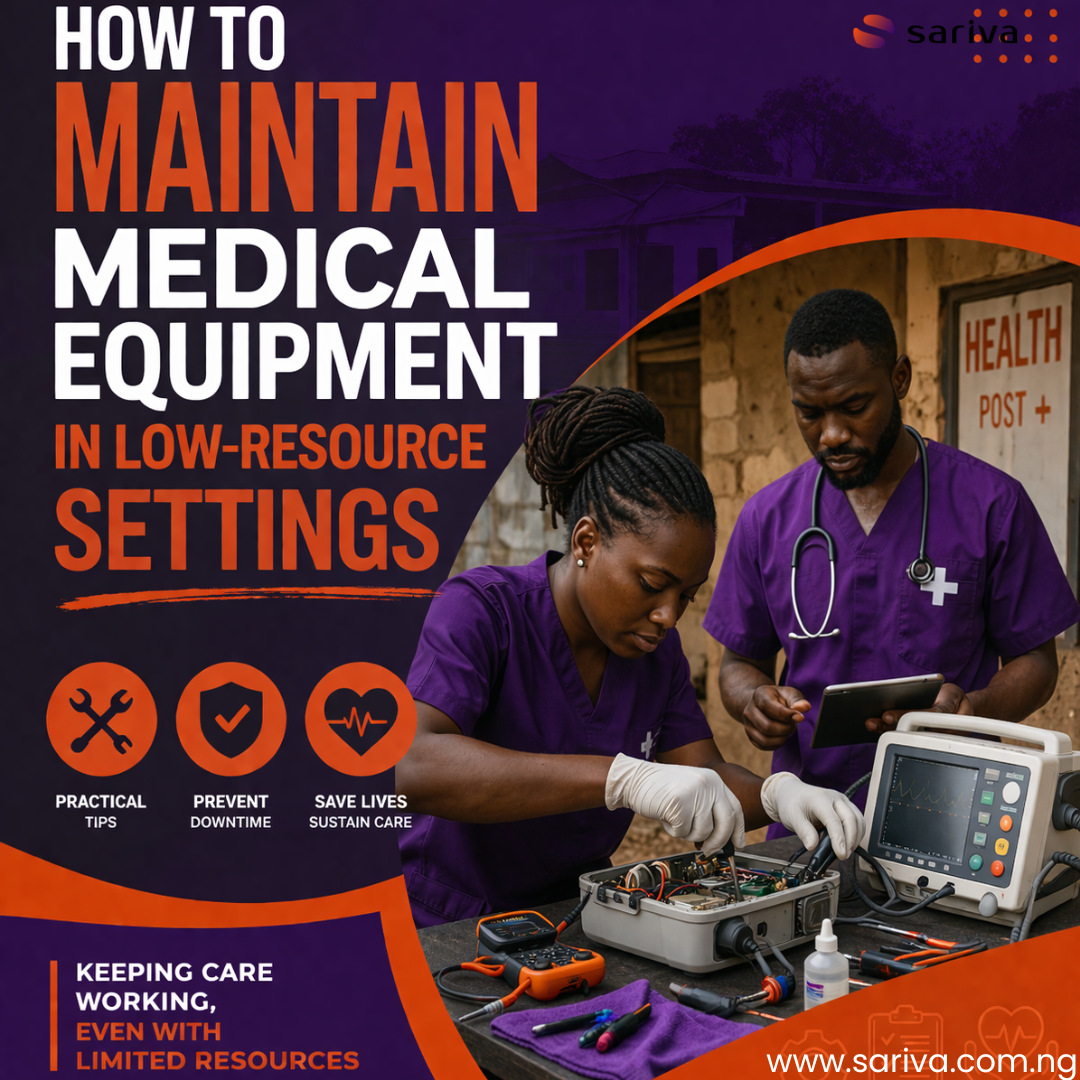
In many healthcare facilities, especially across developing regions, medical equipment operates under constant pressure. Limited budgets, inconsistent power supply, constrained staffing, and high patient volumes create an environment where maintaining equipment becomes both critical and challenging.
Yet even in low-resource settings, equipment reliability is not out of reach. What makes the difference is not always access to advanced tools, but the presence of structured, practical systems that keep devices functional over time.
Maintenance, in this context, is less about perfection and more about consistency.
The Reality of Low-Resource Environments.
Medical equipment in these settings often faces:
- Irregular or unstable power supply
- Limited access to spare parts
- Shortage of trained biomedical engineers
- High utilization rates
- Delayed servicing due to budget constraints
These conditions increase the risk of breakdowns and shorten equipment lifespan. Without a clear maintenance approach, even new devices can fail prematurely.
1. Prioritize Preventive Maintenance Over Repairs.
Waiting for equipment to fail is costly, especially where repair options are limited.
Simple, routine actions can significantly extend equipment life:
- Regular cleaning and basic inspections
- Checking cables, connections, and moving parts
- Monitoring performance for early signs of wear
- Following manufacturer-recommended service intervals as closely as possible
Preventive care reduces the likelihood of major failures that are harder and more expensive to fix.
2. Train Staff for Daily Equipment Care.
In low-resource settings, clinical staff often become the first line of defense for equipment maintenance.
Training should focus on:
- Proper handling and usage
- Basic troubleshooting
- Identifying early warning signs
- Reporting issues promptly
When users understand how equipment works, they are more likely to protect it from avoidable damage.
3. Standardize Simple Maintenance Protocols.
Complex systems are difficult to sustain in constrained environments. Maintenance protocols should be clear, simple, and easy to follow.
Hospitals can implement:
- Checklists for daily and weekly equipment checks
- Basic logbooks to track usage and faults
- Clear procedures for reporting and escalation
Consistency often matters more than complexity.
4. Manage Power-Related Risks.
Power instability is one of the leading causes of equipment damage.
Protective measures include:
- Using voltage stabilizers and surge protectors
- Ensuring proper grounding of equipment
- Planning safe shutdown procedures during outages
- Scheduling use of sensitive equipment during more stable power periods where possible
Even basic power protection can prevent significant damage.
5. Optimize Use of Available Resources.
Limited resources require careful allocation.
Hospitals should:
- Prioritize maintenance for critical equipment
- Avoid overloading single devices when alternatives exist
- Rotate equipment usage where possible to reduce wear
- Keep essential spare parts in stock for high-use devices
Strategic use extends the lifespan of existing equipment.
6. Build Partnerships for Technical Support.
Access to external expertise can bridge gaps in local capacity.
Facilities can collaborate with:
- Equipment suppliers for periodic servicing
- Biomedical engineers or technicians on a contract basis
- Training organizations for staff development
Partnerships help ensure that more complex issues are addressed before they escalate.
7. Track Equipment Performance.
Even in low-resource settings, basic tracking can make a significant difference.
Recording:
- Frequency of faults
- Maintenance activities
- Downtime periods
…helps identify patterns and prioritize interventions. Data, even when simple, supports better decision-making.
Making Maintenance Work With What You Have.
Maintaining medical equipment in low-resource settings is not about having perfect conditions. It is about working deliberately within constraints.
Hospitals that adopt structured routines, invest in staff awareness, and prioritize preventive care often achieve better equipment performance than those with more resources but less coordination.
At Sariva Healthcare, we support facilities in designing maintenance systems that are practical, scalable, and suited to real-world conditions. The focus is on keeping equipment functional, reliable, and safe—regardless of resource limitations.
Because in healthcare, consistency often matters more than complexity.