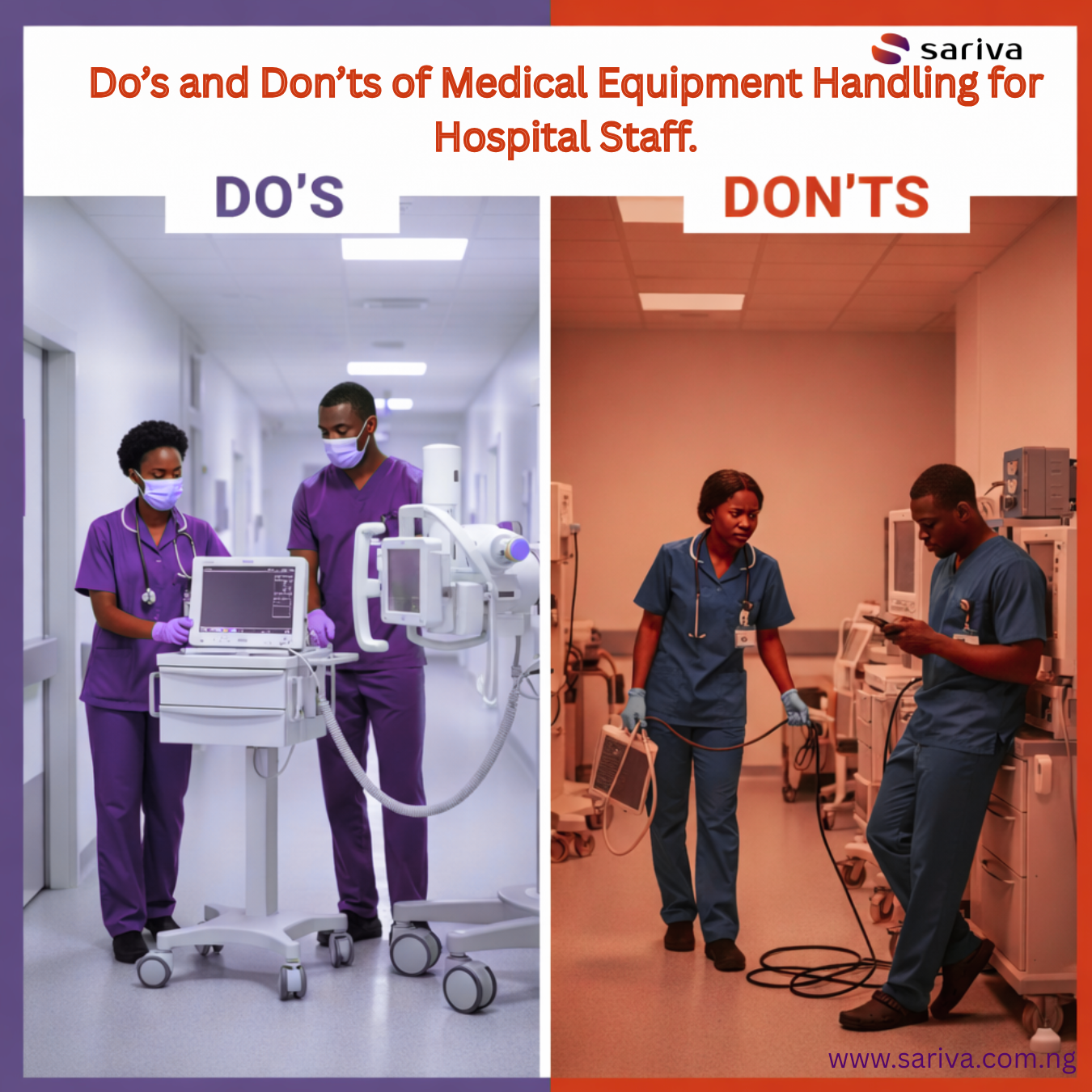
Medical equipment is the backbone of modern healthcare. But even the most advanced machines cannot save lives if they are misused.
Every hospital relies on staff to operate, maintain, and care for equipment correctly. A small mistake can lead to downtime, inaccurate results, or even patient harm.
This article explores practical do’s and don’ts for handling medical equipment in hospitals, helping staff protect both patients and their tools.
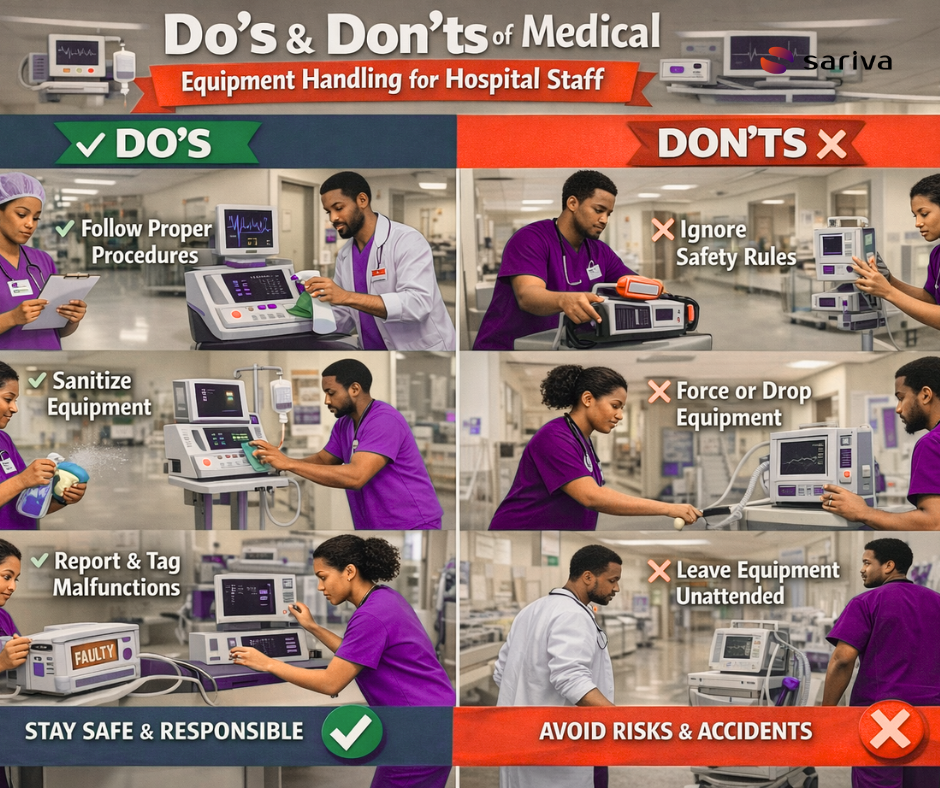
Do: Follow Manufacturer Instructions and Hospital Protocols.
Every device comes with guidelines. Staff must:
- Read and understand the user manual
- Follow calibration and maintenance schedules
- Adhere to hospital protocols for cleaning, storage, and use
Ignoring these instructions can lead to device failure, inaccurate readings, or even injury. Compliance is not bureaucracy; it is patient safety.
Don’t: Rush Operation or Skip Training.
Complex equipment is not intuitive. Operating it without training increases risk.
- Don’t assume you “know how” from experience with a similar device
- Don’t skip refresher courses or competency checks
- Don’t let untrained personnel operate critical machinery
Proper training ensures accuracy, prolongs device life, and prevents avoidable errors.
Do: Handle Equipment With Care.
Even rugged medical devices are sensitive. Handle equipment as if it were fragile:
- Avoid dropping or bumping devices
- Use appropriate transport carts for heavy equipment
- Keep liquids, dust, and extreme temperatures away from electronics
Careful handling reduces repair costs and prevents interruptions in patient care.
Don’t: Ignore Maintenance and Service Needs.
Medical equipment requires routine checks.
- Don’t delay scheduled maintenance
- Don’t ignore warning indicators or unusual sounds
- Don’t attempt repairs beyond your training
Neglect can lead to complete breakdowns, missed diagnoses, or emergency downtime.
Do: Clean and Sterilize Properly.
Infection control is a shared responsibility. Medical equipment must be disinfected and sterilized according to guidelines.
- Use only approved cleaning agents
- Follow recommended procedures for reusable instruments
- Ensure proper storage after cleaning
Proper cleaning protects both patients and staff from cross-contamination.
Don’t: Remove Equipment from Designated Areas Without Authorization.
Portability is useful, but unauthorized movement can compromise function, tracking, and safety.
- Don’t take equipment outside designated zones without logging it
- Don’t bypass hospital inventory systems
- Don’t mix devices between departments without clearance
Tracking ensures equipment is available when and where it’s needed most.
Do: Report Issues Immediately.
Timely reporting prevents minor problems from becoming major failures.
- Report any malfunctions, warning lights, or unusual behavior
- Communicate with biomedical engineers or maintenance teams
- Document incidents as required by hospital policy
Quick action saves time, money, and, most importantly, patient lives.
Don’t: Assume Equipment Will “Fix Itself”.
Modern medical devices are sophisticated, but they are not self-correcting.
- Don’t rely on guesswork or improvisation
- Don’t continue using faulty or inaccurate equipment
- Don’t ignore device alerts or error messages
Responsible handling keeps the hospital functioning smoothly and ensures patients receive safe, reliable care.
Conclusion.
Medical equipment is a hospital’s lifeline. Staff are its guardians. Following these do’s and don’ts is not optional; it is essential for patient safety, operational efficiency, and long-term sustainability.
At Sariva Healthcare, we train, support, and guide hospital staff in proper equipment handling, because every machine works best in capable, informed hands.