In an emergency room, time behaves differently.
Minutes feel like seconds. Small delays become big consequences. Decisions are made with incomplete information, under pressure, and often with lives hanging in the balance.
In these moments, equipment is not just supportive. It becomes part of the decision-making process.
This article looks at the essential equipment that enables fast, accurate decisions in emergency care, and why reliability matters more than complexity.
The ER Is Built for Speed, Not Comfort.
Unlike other hospital units, the emergency room is designed around immediacy. Patients arrive without warning. Conditions range from minor injuries to life-threatening crises.
For clinicians to act quickly, equipment must be:
- Instantly available
- Easy to operate
- Consistent in performance
- Positioned for rapid access
Any delay caused by malfunctioning or poorly placed equipment slows care and increases risk.
Equipment That Shapes Critical Decisions.
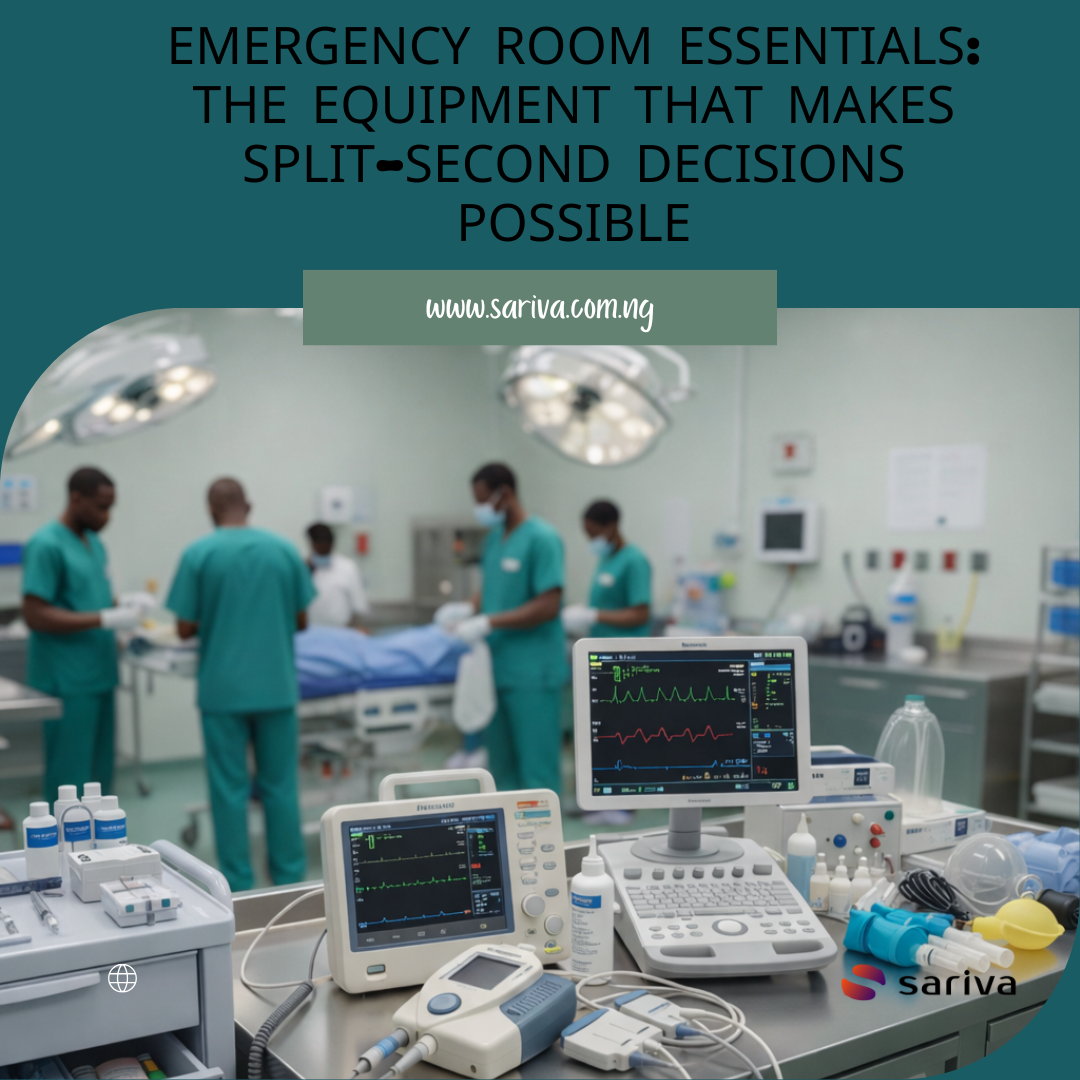
- Diagnostic Tools
Portable ultrasound, ECG machines, and point-of-care testing devices help clinicians make fast, informed decisions without waiting for lab results. - Patient Monitoring Systems
Monitors provide real-time information on heart rate, oxygen saturation, blood pressure, and respiration. In emergency settings, these readings guide immediate interventions - Oxygen Delivery Systems
From cylinders to flow meters and masks, oxygen equipment stabilizes patients before definitive treatment begins. Reliability here is non-negotiable. - Defibrillators
When cardiac arrest occurs, there is no margin for error. Defibrillators must be functional, charged, and accessible at all times. - Suction Units
Airway management often depends on suction. A failed suction unit can turn a manageable situation into a crisis.
Why Reliability Matters More Than Features.
Emergency equipment does not need to be impressive. It needs to work.
Complicated interfaces, fragile components, or frequent calibration issues slow response time. In high-pressure settings, simplicity and durability save more lives than advanced features that are rarely used.
The Hidden Cost of Equipment Failure in the ER.
When equipment fails in the emergency room, the cost is immediate:
- Delayed treatment
- Increased stress for staff
- Higher risk of complications
- Loss of patient confidence
These failures often stem from poor planning, inadequate maintenance, or equipment that was never suited for emergency use.
Building an ER That Responds, Not Reacts.
Emergency readiness is not accidental. It requires deliberate equipment selection, proper placement, routine checks, and trained staff.
At Sariva Healthcare, emergency room setup is approached with speed, safety, and local realities in mind. From selecting durable equipment to ensuring systems are ready for high-pressure use, the focus remains on enabling fast, confident clinical decisions.
Because in emergency care, equipment does not just support decisions.
It makes them possible.