
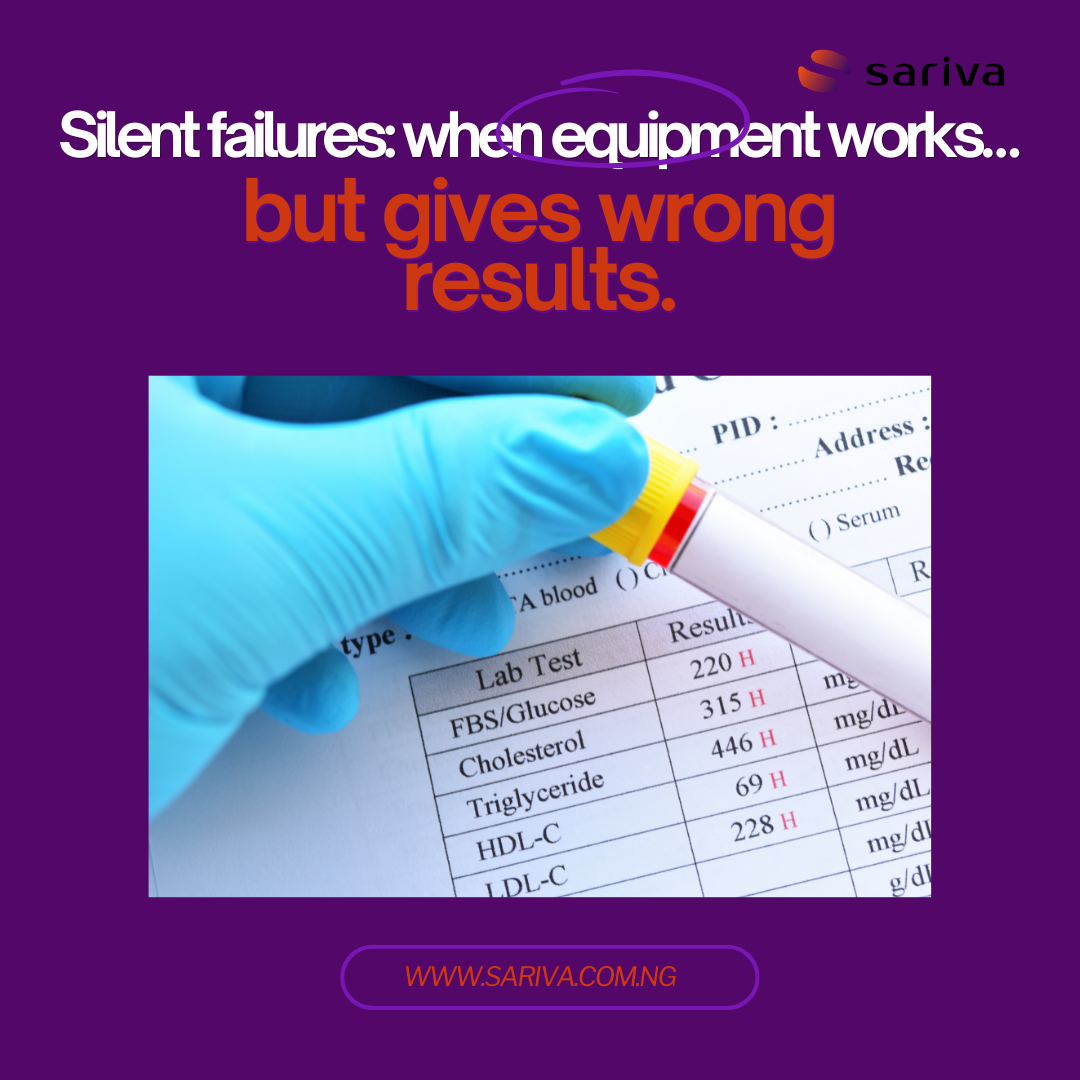
Not every equipment failure is obvious. Some devices stop working entirely. Others trigger alarms. But the most dangerous failures are the quiet ones, the moments when equipment appears to function normally while producing inaccurate results.
These “silent failures” rarely attract immediate attention. There is no downtime, no visible fault, no urgent repair call. Yet the consequences can be far more serious than a complete breakdown.
In healthcare, a machine that gives the wrong answer is often more dangerous than one that gives no answer at all.
What Are Silent Failures?
Silent failures occur when medical equipment continues to operate but delivers compromised outputs.
This could mean:
- A laboratory analyzer reporting inaccurate values
- A monitor displaying readings that do not reflect the patient’s true condition
- Imaging equipment producing degraded or misleading images
- Calibration drift affecting measurement precision
Because the device is still “working,” these errors can go unnoticed for extended periods.
Why Silent Failures Happen.
Silent failures are rarely caused by a single issue. They usually result from gradual system degradation or overlooked processes.
Common causes include:
Calibration drift
Over time, sensors and measurement systems lose accuracy if not recalibrated regularly.
Aging components
Internal wear can affect performance without triggering visible faults.
Power instability
Voltage fluctuations can subtly damage sensitive electronics, altering output accuracy.
Improper usage
Incorrect handling, setup, or configuration can affect results without causing device failure.
Delayed maintenance
Skipped servicing allows minor issues to evolve into performance inconsistencies.
The Clinical and Operational Impact.
Silent failures directly affect decision-making.
1. Misdiagnosis and Delayed Treatment
Incorrect lab values or imaging results can lead clinicians down the wrong path, delaying appropriate care.
2. Compromised Patient Safety
Inaccurate monitoring data may mask deterioration or trigger unnecessary interventions.
3. Loss of Trust
Repeated inconsistencies reduce confidence in both equipment and the facility.
4. Hidden Financial Costs
Repeat tests, extended hospital stays, and corrective treatments increase operational expenses.
Why They Are Hard to Detect.
Unlike visible breakdowns, silent failures blend into routine operations.
- Results may appear “within range” but still be incorrect
- Staff may rely on device output without independent verification
- Minor inconsistencies are often attributed to patient variability rather than equipment error
Without structured checks, these issues can persist unnoticed.
How Hospitals Can Reduce the Risk.
Preventing silent failures requires a deliberate, system-wide approach.
Routine Calibration and Validation
Regular calibration ensures devices maintain accuracy. Validation using control samples or reference standards helps confirm performance.
Preventive Maintenance Programs
Scheduled servicing identifies wear and performance drift before it affects output.
Quality Control Protocols
Laboratories and diagnostic units should run periodic quality checks to verify result accuracy.
Staff Training and Awareness
Clinicians and technicians should be trained to question unexpected results and recognize signs of inconsistency.
Cross-Verification Systems
Where possible, critical results should be confirmed using alternative methods or repeat testing.
Moving Beyond “It Still Works”.
One of the most common assumptions in healthcare operations is that functioning equipment is reliable equipment. Silent failures challenge this assumption.
Hospitals must shift from asking “Is the device working?” to “Is the device working accurately?”
This shift requires attention not just to uptime, but to performance quality.
Where System Thinking Matters.
Silent failures are rarely the result of a single oversight. They reflect gaps in maintenance, training, monitoring, and operational discipline.
Hospitals that prioritize accuracy alongside functionality build stronger, safer systems.
At Sariva Healthcare, equipment performance is approached as a lifecycle responsibility. From installation and calibration to maintenance and quality assurance, the focus is on ensuring that devices deliver results clinicians can trust.
Because in healthcare, the most dangerous error is the one no one notices.