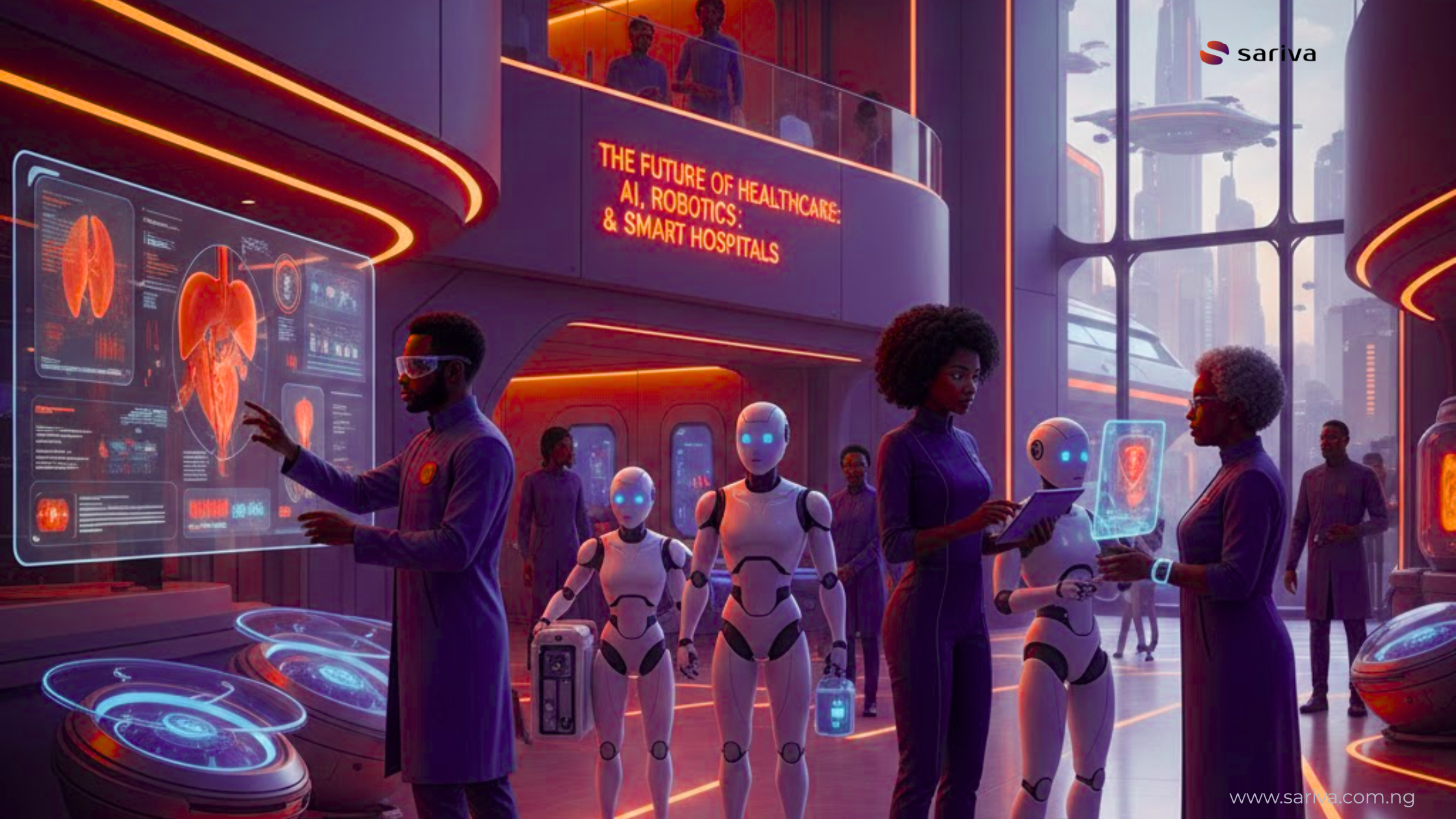
When we think of the future of healthcare, images of robots performing surgery or AI diagnosing diseases often come to mind. But the future isn’t just science fiction; it’s about improving outcomes, reducing human error, and making healthcare more accessible and efficient.
Smart hospitals, AI systems, and robotics are not novelties; they are tools that enhance human capability. They don’t replace doctors, nurses, or lab technicians, they empower them to work faster, safer, and smarter.
This article dives deep into how AI, robotics, and smart hospitals are reshaping healthcare, the real benefits, the challenges, and what it means for hospitals in Nigeria.
Artificial Intelligence: More Than Automated Diagnostics.
AI in healthcare is often portrayed as a magic black box that “reads scans” or “predicts disease.” The reality is subtler and more powerful.
AI systems analyze vast amounts of data quickly, far faster than a human could. They help:
- Detect patterns in imaging and lab results
- Identify early signs of disease before symptoms appear
- Predict patient deterioration in critical care
- Optimize hospital workflows, from bed management to supply chain
In Nigeria, AI could be transformative. With high patient volumes and overworked staff, AI systems can flag urgent cases faster, prioritize resources, and reduce preventable errors.
However, implementation requires accurate local data, staff training, and integration with existing systems. AI is only as good as the environment it operates in.
Robotics: Precision, Speed, and Safety.
Robotic systems in hospitals are not just surgical toys; they deliver precision that human hands sometimes cannot match, and they work tirelessly in repetitive or high-stakes tasks.
Key areas include:
- Surgical robots that assist in minimally invasive procedures, reducing recovery times
- Automated medication dispensers that minimize dosage errors
- Logistics robots that transport supplies, samples, and medicines across the hospital
In the Nigerian context, robotics can free staff from routine tasks, allowing them to focus on patient care. But the challenge is infrastructure: power stability, maintenance, and technical support are essential to keep robots functioning reliably.
Smart Hospitals: Integration Is Everything.
A smart hospital is not defined by gadgets or flashy technology; it is defined by systems that communicate seamlessly.
In smart hospitals:
- Patient records, lab results, and imaging data are accessible instantly across departments
- AI algorithms help manage bed occupancy, staffing, and patient flow
- Monitoring systems track patient vitals continuously, alerting staff to issues before they escalate
- Predictive analytics support preventive care rather than just reactive treatment
For Nigeria, smart hospitals represent a vision where technology bridges gaps in infrastructure, staff shortages, and uneven service delivery, if the integration is done correctly.
Challenges: Technology Isn’t a Cure All.
Even the most advanced AI or robotic system cannot compensate for poorly trained staff, broken workflows, or unstable infrastructure. Key challenges include:
- Power outages affecting equipment reliability
- Limited local technical expertise for maintenance
- High initial investment costs
- Data privacy and cybersecurity concerns
Smart healthcare in Nigeria must address these realities first. Technology alone does not equal better care, systems, people, and processes must evolve together.
The Human Factor Remains Central.
Technology is powerful; but it is not the hero. The hero is the clinician who interprets AI insights, the nurse who manages robotic-assisted care, and the healthcare administrator who ensures systems run smoothly.
AI, robotics, and smart hospitals amplify human skill; they do not replace it. In a well-designed system, technology reduces human error, speeds up care, and allows staff to focus on what matters most: the patient.
Looking Ahead.
The future of healthcare is not distant; it is arriving now. Nigerian hospitals that embrace smart systems thoughtfully can improve patient outcomes, optimize resources, and provide higher-quality care.
At Sariva Healthcare, we approach technology adoption with a clear focus on practicality and sustainability. AI, robotics, and smart hospital solutions are integrated into real-world workflows, designed to work reliably in local healthcare environments.
Because the future of healthcare is not about having the latest machine. It’s about using technology to make every patient’s journey from diagnosis to recovery safer, faster, and more precise.