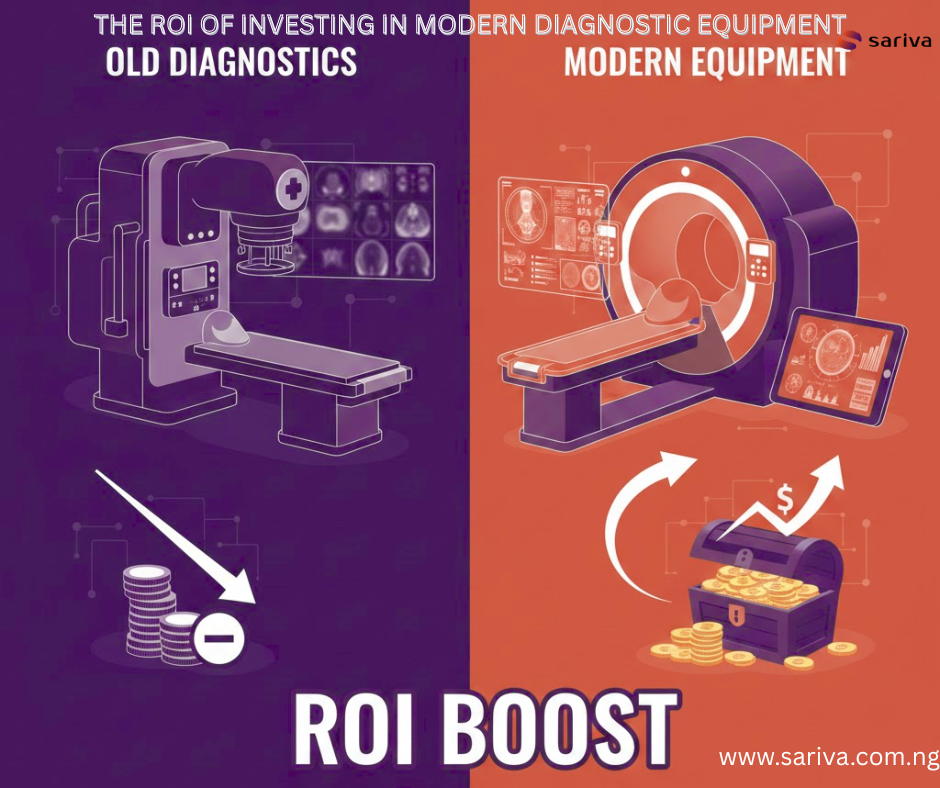
Healthcare investment decisions often revolve around cost. Diagnostic equipment, in particular, is sometimes viewed as a large expense rather than a strategic asset.
But diagnostics sit at the center of clinical decision-making. When diagnostic tools are outdated, slow, or unreliable, the ripple effects extend across the entire hospital system.
Modern diagnostic equipment is not just a purchase. It is an investment that shapes efficiency, patient outcomes, and long-term financial sustainability.
This article explores the real return on investment (ROI) hospitals gain when they prioritize modern diagnostic equipment.
ROI in Healthcare Goes Beyond Financial Metrics.
In most industries, ROI is measured strictly in revenue. In healthcare, the definition is broader.
Return on investment includes:
- Faster and more accurate diagnosis
- Reduced treatment delays
- Improved patient outcomes
- Increased patient trust and hospital reputation
- Operational efficiency and reduced waste
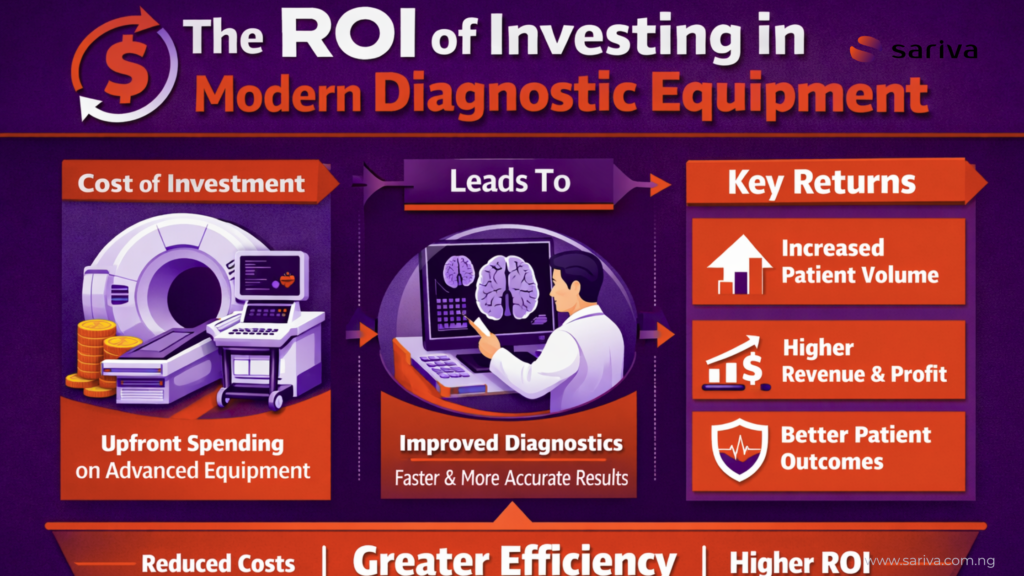
Financial benefits follow when clinical performance improves.
Speed Improves Throughput and Revenue.
Modern diagnostic equipment significantly reduces turnaround time.
Faster imaging, automated laboratory analyzers, and point-of-care testing allow clinicians to make decisions quickly. This leads to:
- Shorter patient waiting times
- Increased daily patient capacity
- Faster discharge cycles
- Reduced bed occupancy pressure
Hospitals are able to serve more patients without compromising quality, improving revenue flow over time.
Accuracy Reduces Hidden Costs.
Misdiagnosis or delayed diagnosis carries financial and clinical consequences.
Inaccurate results often lead to:
- Repeat testing
- Extended hospital stays
- Ineffective treatment plans
- Legal and reputational risks
Modern equipment minimizes these risks through improved precision and consistency, reducing avoidable costs that rarely appear in procurement discussions.
Lower Maintenance and Downtime Expenses.
Outdated equipment often requires frequent repairs, unavailable spare parts, and unplanned servicing.
Modern systems are designed with:
- Predictive maintenance features
- Improved durability
- Manufacturer support and software updates
- Energy efficiency
Reduced downtime ensures continuous service delivery and stable revenue generation.
Patient Trust as a Financial Asset.
Patients increasingly associate modern equipment with quality care.
Hospitals equipped with advanced diagnostic tools experience:
- Higher patient confidence
- Increased referrals
- Improved competitive positioning
- Greater willingness of patients to seek early diagnosis
Trust becomes a long-term driver of hospital growth.
The Nigerian Context: A Strategic Advantage.
In Nigeria, diagnostic capacity gaps remain a challenge. Many hospitals still depend on referrals for tests that could be performed in-house.
Investing in modern diagnostic equipment allows hospitals to:
- Reduce external referrals and retain revenue
- Improve emergency response capability
- Attract specialist clinicians
- Serve growing demand for preventive screening
However, ROI in Nigeria depends on selecting equipment suited to local realities—power stability, service availability, consumable supply, and staff training.
A Lifecycle View of Diagnostic Investment.
True ROI emerges when equipment is evaluated across its lifecycle, not just its purchase price.
Hospitals that prioritize quality experience:
- Longer equipment lifespan
- Predictable maintenance costs
- Consistent clinical performance
- Sustainable operational efficiency
Cheap equipment may reduce initial spending but often increases long-term costs.
Conclusion.
Modern diagnostic equipment sits at the intersection of clinical excellence and financial sustainability. It improves decision-making, enhances patient outcomes, and strengthens hospital operations.
At Sariva Healthcare, diagnostic solutions are approached with a lifecycle mindset—balancing clinical needs, financial realities, and local operational conditions.
Because the real ROI of diagnostics is not just measured in revenue.
It is measured in confidence, efficiency, and lives improved through timely, accurate care.