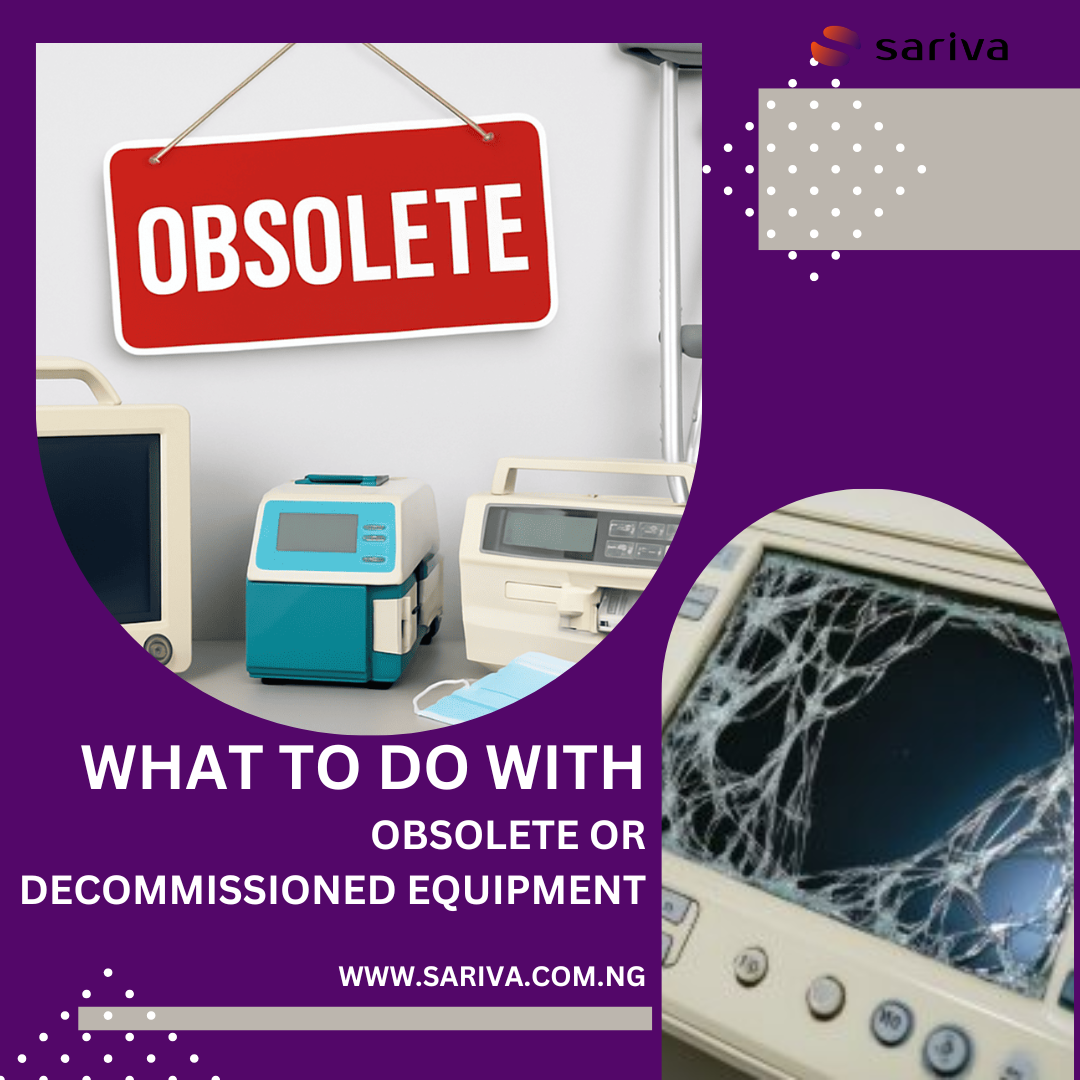
Every piece of medical equipment has a lifecycle. It is procured, installed, used, maintained, and eventually, it reaches a point where it no longer serves its purpose.
For many hospitals, the challenge is not recognizing when equipment is obsolete. It is deciding what to do next. Too often, retired devices are left in storage rooms, corridors, or unused spaces, quietly occupying valuable real estate and creating operational clutter.
Obsolete equipment, when not properly managed, becomes more than inactive, it becomes a liability.
This article explores practical, responsible ways hospitals can handle decommissioned equipment while protecting safety, compliance, and operational efficiency.
Why Proper Disposal Matters.
Decommissioned equipment is not harmless. It can pose several risks:
- Safety hazards: Damaged or aging devices may contain electrical, mechanical, or chemical risks.
- Infection control concerns: Improperly stored equipment can become contaminated.
- Data security risks: Devices with digital storage may still contain sensitive patient data.
- Regulatory implications: Improper disposal may violate environmental or healthcare regulations.
Managing obsolete equipment properly is part of responsible hospital operations.
1. Conduct a Formal Decommissioning Process.
Before deciding what to do with equipment, it must be officially decommissioned. This includes:
- Removing it from active service
- Documenting its condition and reason for retirement
- Updating asset registers and inventory systems
- Ensuring safe disconnection from power and infrastructure
A structured process ensures accountability and prevents accidental reuse of unsafe devices.
2. Evaluate for Redeployment.
Not all retired equipment is completely unusable. Some devices may still function but no longer meet the needs of a specific department.
Hospitals can:
- Reassign equipment to lower-demand units
- Transfer devices to smaller or less specialized facilities
- Use certain equipment for training purposes
Redeployment extends value while ensuring equipment is used appropriately.
3. Consider Refurbishment or Trade-In Options.
In some cases, equipment can be refurbished by certified vendors and returned to functional condition.
Options include:
- Manufacturer refurbishment programs
- Trade-in agreements when purchasing new equipment
- Third-party refurbishment services (where appropriate and compliant)
These approaches can offset the cost of replacement while ensuring older devices are handled professionally.
4. Donation to Underserved Facilities.
Functional but outdated equipment can still serve a purpose in settings with fewer resources.
Hospitals may choose to donate equipment to:
- Rural or community health centers
- Training institutions
- Non-profit healthcare organizations
However, donations should be approached responsibly. Equipment should be safe, functional, and supported by basic training and maintenance capacity. Donating unusable equipment simply transfers the problem elsewhere.
5. Environmentally Responsible Disposal.
When equipment can no longer be used, proper disposal is essential. Medical devices often contain:
- Electronic components
- Batteries
- Hazardous materials
Hospitals should work with certified waste management providers to ensure compliance with environmental regulations and safe disposal practices.
6. Secure Data Before Disposal.
Many modern medical devices store patient data. Before disposal or transfer:
- Wipe or destroy storage components
- Reset systems to factory settings
- Verify that no sensitive data remains
Data security is a critical step that is often overlooked.
7. Avoid “Storage Without Strategy”.
One of the most common outcomes for obsolete equipment is indefinite storage.
This approach creates:
- Cluttered clinical environments
- Inefficient use of space
- Difficulty tracking active vs inactive assets
Hospitals should establish clear timelines for action after decommissioning to prevent accumulation.
Turning End-of-Life Into Opportunity.
Obsolete equipment does not have to represent loss. When handled strategically, it can:
- Support cost recovery through trade-ins
- Contribute to training and education
- Strengthen partnerships through donations
- Improve operational efficiency by freeing up space
The key is intentional planning rather than delayed decisions.
Where Structured Planning Makes the Difference.
Managing equipment beyond its active use requires coordination across clinical, technical, and administrative teams. Hospitals that plan for end-of-life from the beginning avoid last-minute decisions and unnecessary risks.
At Sariva Healthcare, equipment lifecycle management includes not just procurement and maintenance, but also responsible decommissioning and disposal strategies. The goal is to ensure that every stage of a device’s lifecycle supports safety, efficiency, and long-term value.
Because in healthcare, what happens after equipment use matters just as much as how it is used.