
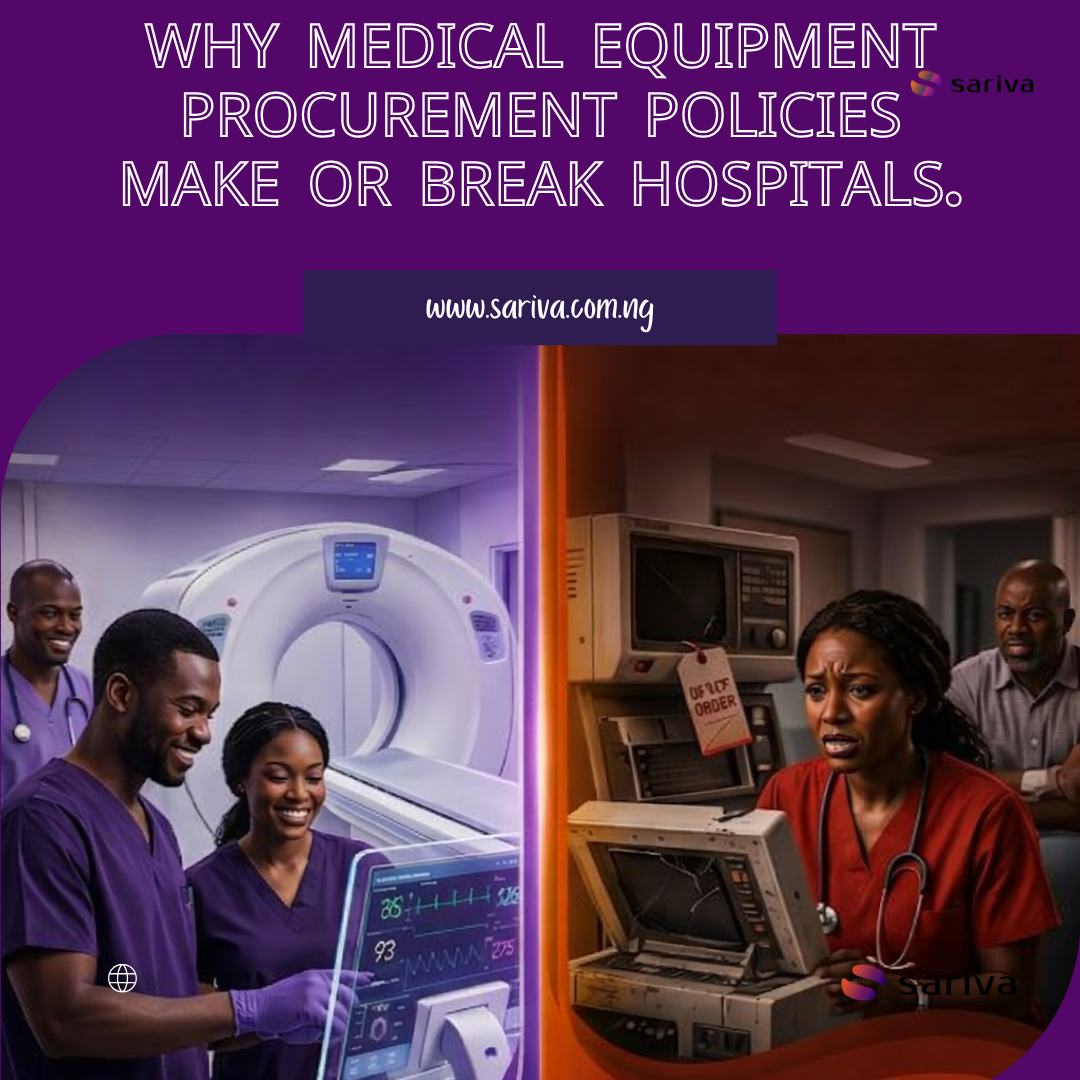
Medical equipment is the backbone of any hospital. From ventilators and imaging systems to laboratory analyzers and sterilization units, equipment determines the quality, efficiency, and safety of care delivered.
Yet in many public hospitals, procurement policies are treated as a bureaucratic formality rather than a strategic function. Decisions are often influenced by short-term budgets, political considerations, or fragmented approval processes. The result is equipment that may arrive late, fail to meet operational needs, or become a financial burden rather than an asset.
Proper procurement policies are not just about acquiring equipment, they are about ensuring the right devices reach the right departments, are sustainable, and deliver measurable value to patients and staff.
The Role of Procurement in Hospital Performance.
Effective procurement policies align hospital needs with operational reality. They:
- Define clear specifications based on clinical workflows and patient volume.
- Assess long-term costs, including maintenance, consumables, and training.
- Ensure regulatory compliance, meeting local and international standards.
- Promote accountability through transparent selection and approval processes.
When procurement policies fail, hospitals face equipment mismatches, underutilization, and budget overruns.
Common Procurement Pitfalls.
Public hospitals often encounter several recurring challenges:
- Buying Without Needs Assessment
Equipment is purchased without fully understanding departmental requirements, patient volume, or staff capacity. The result: machines sit idle or are underused. - Ignoring Lifecycle Costs
Focusing solely on purchase price neglects ongoing costs like maintenance, spare parts, and staff training. Short-term savings become long-term losses. - Delayed or Fragmented Approval Processes
Lengthy bureaucratic procedures delay equipment delivery, sometimes rendering it obsolete by the time it arrives. - Lack of Vendor Evaluation
Procurement without proper vetting can lead to unreliable suppliers, poor aftersales support, and non-compliant equipment. - Minimal Staff Engagement
Decisions made without input from clinicians and technicians risk operational incompatibility, inefficiency, or safety hazards.
The Impact on Hospital Operations.
When procurement policies are weak, hospitals face cascading consequences:
- Operational inefficiency – equipment does not match workflow or patient load.
- Increased costs – frequent repairs, early replacement, and underutilized devices inflate budgets.
- Compromised patient care – delays, errors, and substandard diagnostics affect outcomes.
- Staff frustration – clinicians and technicians must adapt to equipment that does not meet their needs.
Best Practices for Procurement Policies.
Public hospitals can strengthen procurement by implementing strategic policies:
- Needs-driven planning – involve clinical and technical teams to define equipment requirements.
- Total cost of ownership analysis – consider maintenance, consumables, energy, and training alongside purchase price.
- Vendor assessment and partnerships – select reliable suppliers with proven service records.
- Transparent and timely processes – streamline approvals while maintaining accountability.
- Integration with training and operations – ensure staff are prepared to use equipment effectively from day one.
Procurement as a Strategic Function.
Procurement should be viewed as a critical lever in hospital performance. The right policies transform equipment acquisition from a transactional activity into a system that supports sustainability, efficiency, and quality care.
At Sariva Healthcare, we advise public hospitals on end-to-end equipment planning from policy design and needs assessment to installation, training, and lifecycle support. By treating procurement as a strategic process, hospitals avoid costly mistakes and ensure that equipment enhances, rather than hinders, care delivery.
Because in healthcare, how you buy equipment can be just as important as what you buy.