Electricity is often treated as a background utility in hospitals. It is expected to be available, stable, and invisible.
In many parts of Nigeria, that expectation does not hold.
Power fluctuations, sudden outages, and inconsistent voltage are not occasional disruptions. They are part of daily operations. And for medical equipment, these conditions are not just inconvenient. They are damaging.
This article looks at the role of voltage regulators and UPS systems in protecting medical equipment, and why they are not optional additions, but part of the infrastructure that determines whether a hospital can function reliably.
Power Quality Is Not the Same as Power Availability.
A facility may have electricity and still be operating under unsafe conditions.
Medical equipment is designed to function within specific voltage ranges. When power supply moves outside those limits, even briefly, it can affect:
- Equipment accuracy
- Component lifespan
- System stability
- Patient safety
Common power issues in healthcare facilities include:
- Voltage spikes and surges
- Voltage drops (brownouts)
- Sudden power outages
- Frequency instability
These are not always visible, but their impact accumulates over time.
What a Voltage Regulator Actually Does.
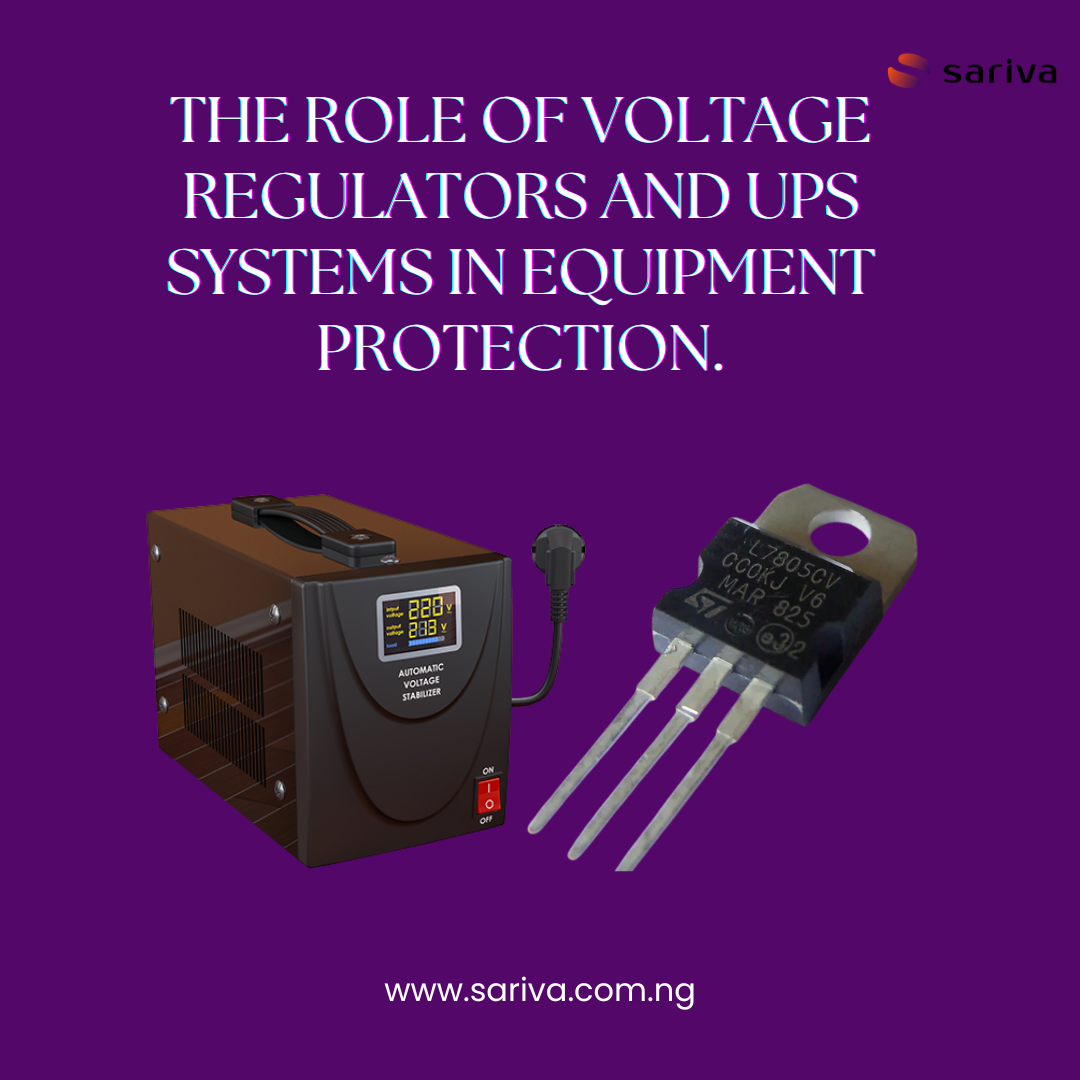
A voltage regulator stabilizes incoming electrical supply.
Instead of allowing equipment to receive fluctuating voltage directly from the grid or generator, the regulator adjusts it to remain within a safe operating range.
This protects against:
- Overvoltage, which can burn internal components
- Undervoltage, which can cause malfunction or incomplete operation
For sensitive equipment such as imaging systems, laboratory analyzers, and ICU devices, stable voltage is not a luxury. It is a requirement.
Without regulation, equipment is forced to operate under stress conditions it was not designed for.
The Role of UPS Systems Beyond Backup.
A Uninterruptible Power Supply (UPS) is often misunderstood as a short-term backup power source.
That is only part of its function.
A UPS provides:
- Instant power during outages (no delay)
- Protection against sudden shutdowns
- Power conditioning (in many systems)
- Time for safe shutdown or transition to generator power
In critical care environments, even a few seconds of power loss can have consequences.
Devices such as ventilators, monitors, and laboratory systems depend on continuity. A UPS ensures that operations are not interrupted at the exact moment stability is needed.
Why Equipment Fails Without Protection.
It is easy to attribute equipment failure to “faulty machines.”
In many cases, the underlying issue is power instability.
Repeated exposure to poor power conditions leads to:
- Damaged circuit boards
- Reduced equipment lifespan
- Frequent breakdowns
- Inconsistent performance
- Increased maintenance costs
What appears to be a technical fault is often an electrical one.
Without voltage regulation and backup systems, even high-quality equipment will degrade faster than expected.
Not All Protection Systems Are Equal.
Installing a regulator or UPS is not enough. The specification matters.
Key considerations include:
- Load capacity relative to equipment demand
- Response time to voltage changes
- Battery backup duration (for UPS systems)
- Compatibility with the type of equipment
- Integration with generators and other power sources
Undersized or poorly matched systems create a false sense of protection.
In some cases, they introduce additional risks.
Where Protection Fits in Hospital Setup.
Power protection is often considered late in the setup process, usually after equipment has been purchased or installed.
This approach creates gaps.
Voltage regulators and UPS systems should be planned alongside:
- Equipment selection
- Electrical load design
- Generator capacity
- Facility infrastructure
When treated as an afterthought, hospitals end up retrofitting solutions that are less effective and more expensive.
The Cost of Ignoring Power Stability.
The financial impact of poor power protection is rarely immediate, but it is consistent.
Hospitals may experience:
- Repeated repair costs
- Downtime affecting service delivery
- Loss of revenue from non-functional equipment
- Compromised patient care
Over time, the cost of damage and inefficiency exceeds the cost of proper protection.
From Electricity to Reliability.
Reliable healthcare delivery depends on more than having the right equipment.
It depends on creating the conditions in which that equipment can perform consistently.
Voltage regulators and UPS systems form part of that foundation. They protect investment, reduce downtime, and support continuity of care.
Where Proper Planning Makes the Difference.
Hospitals that integrate power protection into their setup from the beginning tend to experience fewer disruptions and longer equipment lifespans.
This requires coordination between technical, clinical, and infrastructure planning.
At Sariva Healthcare, equipment protection is considered part of the system, not an accessory. From selection to installation and long-term support, the focus remains on ensuring that equipment functions reliably within real operating conditions.
Because in healthcare, stability is not optional. It is what everything else depends on.